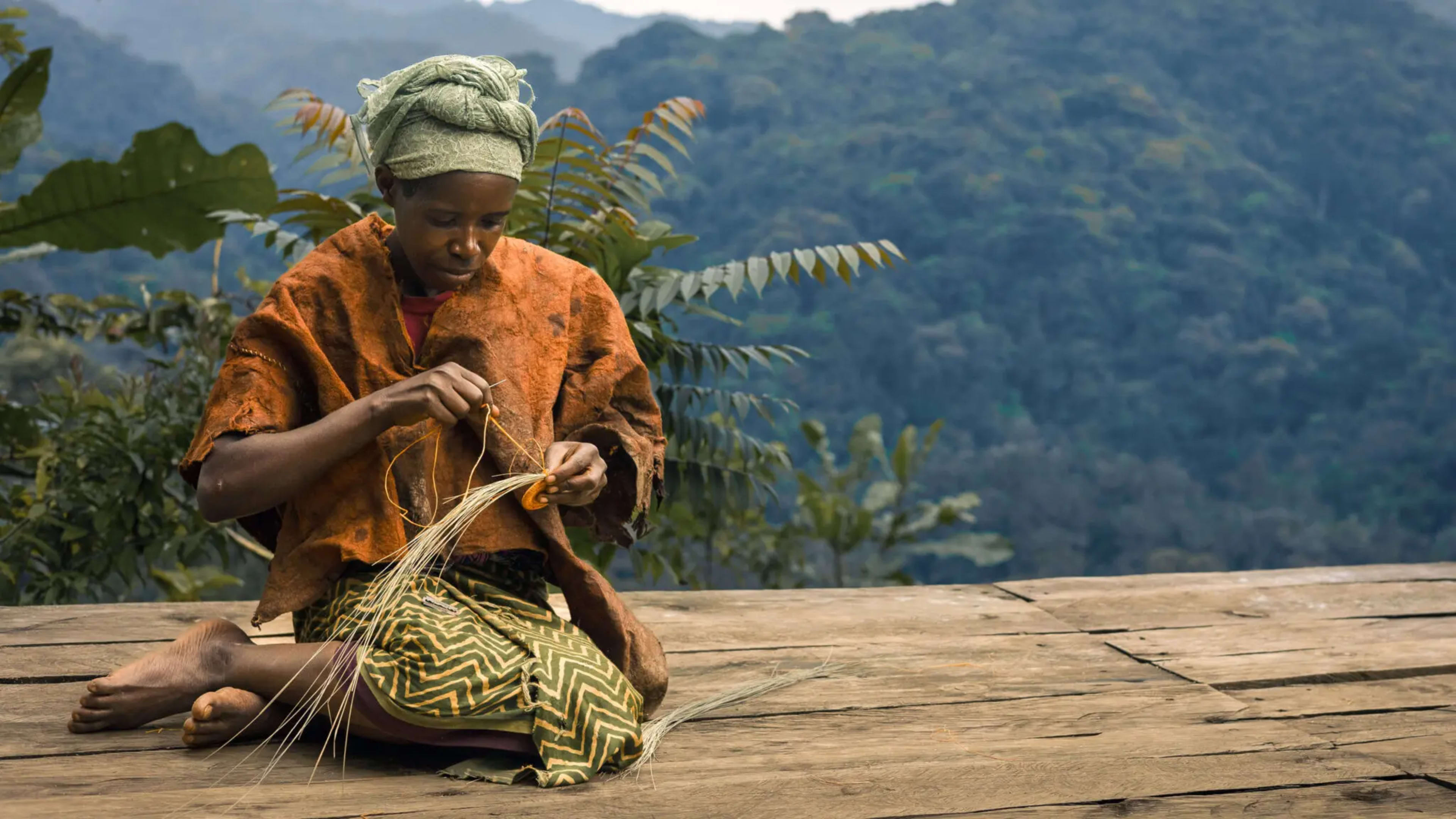
Bwindi Impenetrable National Park
Bwindi Impenetrable National Park sits in the southwestern corner of Uganda where the Albertine Rift meets the Congo Basin. This 331-square-kilometre slab of ancient montane rainforest clings to the steep ridges and valleys of the Virunga Massif, draped in mist more mornings than not, its canopy so dense that the Batwa people who lived here for millennia called it "the place of darkness."
It is home to roughly 459 mountain gorillas - nearly half the world's entire population of fewer than 1,100. There is no zoo, no documentary, no photograph that prepares you for the moment a silverback looks up from his bamboo shoot and holds your gaze. The intelligence behind those deep brown eyes, the sheer physical presence of a 200-kilogram primate sitting three metres away, the sound of his breathing - it is the most humbling wildlife encounter most people will ever have.
The Gorilla Trekking Experience
Each morning, small groups of eight trekkers set out with Uganda Wildlife Authority rangers and trackers to locate one of Bwindi's 20+ habituated gorilla families. Trackers have been in the forest since dawn, following the family's trail from where they nested the previous night.
The trek itself is an adventure. Bwindi's terrain is relentlessly steep - deep valleys choked with undergrowth, slippery clay slopes, streams crossed on fallen logs, and vegetation so thick your machete-wielding guide cuts the path in front of you. This is not a groomed nature walk. This is the gorillas' home, and you enter on their terms.
When you find them - and you will - the rangers signal the group to stop. You drop your bags, remove your camera, and approach slowly. The one hour you spend with the gorilla family passes in what feels like ten minutes. Infants tumble and play. Females groom each other with focused precision. The silverback, weighing twice what you do, watches with an calm authority that radiates across the forest floor.
Four Trekking Sectors
Bwindi is divided into four sectors, each with its own gorilla families:
Buhoma (North)
The original trekking sector and the most accessible from Kampala. Home to the Mubare group - the first family habituated for tourism in 1993. Treks tend to be moderate in difficulty.
Ruhija (East)
Higher altitude sector (2,350m) with cooler temperatures and misty conditions. Gorilla families here include Oruzogo and Bitukura. The landscape is more open, with bamboo forest mixed with montane vegetation.
Rushaga (South)
The most popular sector with the highest concentration of habituated families. Home to Nshongi, Mishaya, Kahungye, Busingye, and Bweza groups. Terrain is steep and challenging but the density of families means shorter search times on average.
Nkuringo (Southwest)
The most physically demanding sector with very steep terrain descending toward the Congo border. The Nkuringo family is one of the most relaxed around humans. Views from the ridge are spectacular on clear days.
Beyond Gorillas
While gorillas are Bwindi's headline act, the park is one of the most biodiverse forests in Africa. Over 350 bird species have been recorded - including 23 Albertine Rift endemics - making it a premier birding destination. The African green broadbill, Shelley's crimsonwing, and Grauer's broadbill are among the most sought-after species.
Eleven other primate species inhabit the forest, including chimpanzees, L'Hoest's monkeys, red-tailed monkeys, and black-and-white colobus. Forest elephants, giant forest hogs, and numerous duiker species are present but rarely seen in the dense undergrowth.
Getting There
Bwindi is approximately 8-10 hours by road from Kampala, or a 1-hour charter flight to Kisoro or Kihihi airstrip. Most visitors combine Bwindi with Queen Elizabeth National Park (3-4 hours drive) for a complete Uganda wildlife safari.
Quick Facts
| Detail | Information |
|---|---|
| Size | 331 km² |
| Elevation | 1,160 - 2,607m |
| Gorilla Families | 20+ habituated |
| Gorilla Population | ~459 |
| Permit Cost | $700 per person |
| UNESCO Status | World Heritage Site (1994) |
| Best Months | Jun-Sep, Dec-Feb |
| Location | Southwestern Uganda |