The Shoebill Bird
The shoebill bird is one of the strangest and most captivating creatures in Africa. Many travelers hear about it for the first time when planning a birding trip, then end up fascinated by its prehistoric appearance and calm presence. The shoebill is known for its enormous shoe shaped bill, its slow movements and its ability to stand completely still for long periods. Seeing this bird in the wild feels less like spotting normal wildlife and more like discovering a creature from another time.
What Makes the Shoebill So Unique
The shoebill is often compared to a dinosaur like figure because of its tall height, broad wings and piercing stare. Adults can reach more than one meter in height, which makes them almost as tall as a child. Their bill is large and strong, shaped in a way that helps them catch lungfish, frogs and small reptiles. This unusual appearance is not only for show but is perfectly adapted for life in swampy wetlands.
Unlike many birds that move quickly or fly from perch to perch, the shoebill relies on patience. It stands silently in shallow water waiting for prey to surface. When the moment comes, it strikes with surprising speed. Travelers often find themselves whispering around shoebills because the stillness of the moment feels almost sacred. It is not a loud or busy bird. It is a calm presence in a wild landscape.
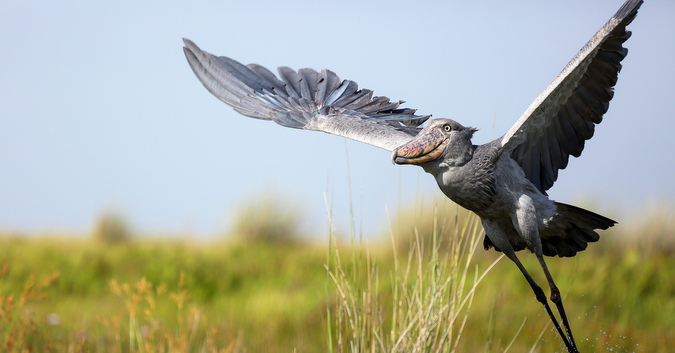
Shobill bird
Where Shoebill Birds Live
Shoebills live in the freshwater marshes and swamps of East and Central Africa. Uganda is one of the best countries in the world to see them, especially in places like Mabamba Swamp near Lake Victoria. Rwanda and Tanzania also offer occasional sightings, but Uganda remains the most reliable destination. The swamps create the perfect environment for shoebills since they rely on tall grasses and shallow waters where lungfish and other prey thrive.
The journey to reach the shoebill habitat is part of the adventure. Travelers glide across narrow channels in wooden boats, surrounded by reeds and warm breezes. The guide scans the grass for movement while the boatman rows quietly. When a shoebill finally appears, standing tall in the wetland like a motionless statue, there is always a moment of shared excitement among the group.
Behavior and Personality of the Shoebill
Despite its intense stare, the shoebill has a calm and gentle nature. It does not show aggression toward visitors as long as people keep a respectful distance. The bird prefers solitude and often stays alone while hunting. Its most famous behavior is the long stretch of stillness that can last several minutes. This slow and calculated style surprises travelers who expect birds to be quick and energetic.
Some shoebills emit a bill clattering sound that resembles a low rattle. They use this sound mostly during breeding or communication with their young. Watching a shoebill spread its wings or take flight is another highlight since their wingspan can reach more than two meters. The combination of size and grace makes it an unforgettable sight.
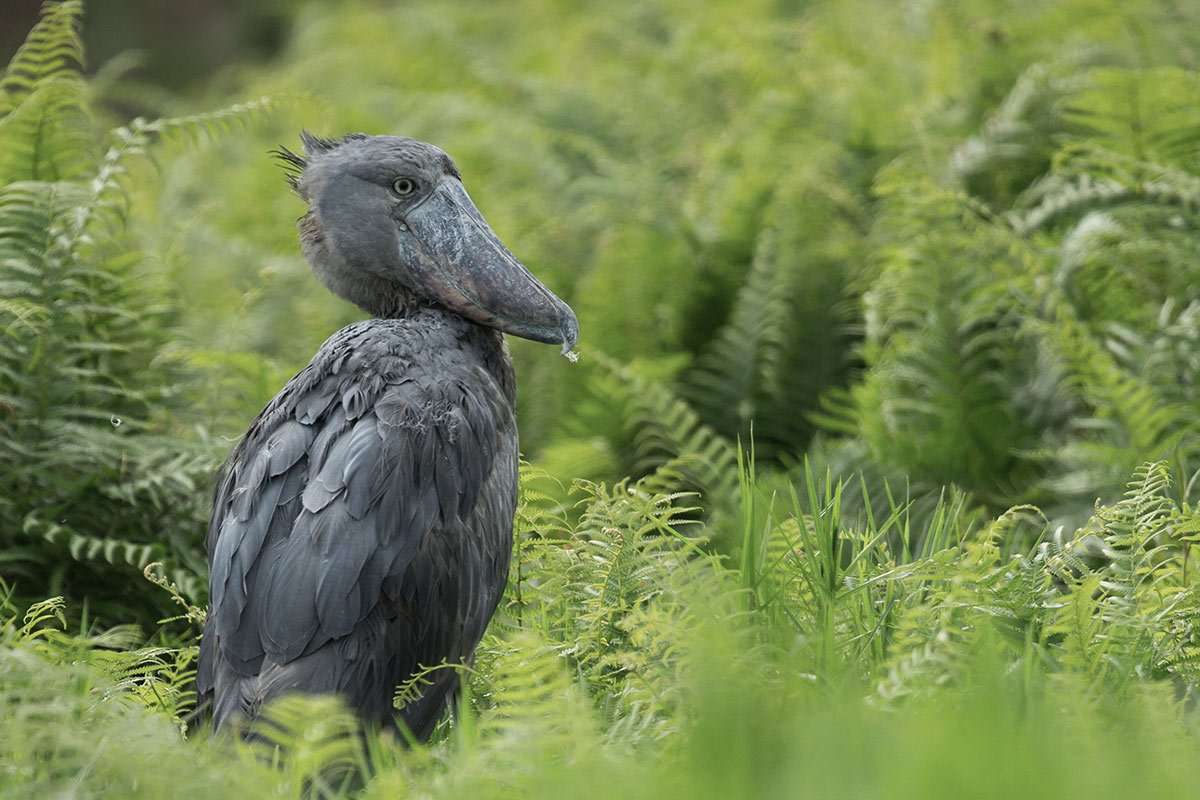
An adult shoebill bird
Shoebill Conservation and Why It Matters
Although the shoebill attracts many bird watchers, it remains a vulnerable species. Wetland degradation, habitat loss and human activity continue to reduce their numbers. Conservation groups and local communities work together to protect breeding areas and ensure tourism supports the species instead of harming it. Responsible tours play an important role by teaching visitors the right way to observe shoebills without disturbing their natural behavior.
Travelers who visit the swamps often leave with a deeper respect for the delicate ecosystems that keep these birds alive. The shoebill is a reminder that nature can be both strange and fragile. Every sighting supports the idea that travel can contribute to conservation when done thoughtfully.
How Makisala Safaris Helps You See the Shoebill
Makisala Safaris organizes well planned birding and wildlife trips across East Africa, including special excursions focused on spotting the shoebill. The team works with local guides who know exactly where the birds nest and hunt. This increases the chances of seeing them in the wild, especially in popular areas like Mabamba Swamp.
Makisala handles all logistics including transport, boat arrangements, timing of the tour and guidance from expert birders. This makes the experience smooth even for first time visitors who are new to birding. The company also supports conservation friendly practices by working with communities who protect the wetlands where shoebills live. Travelers get an experience that is both responsible and memorable, without having to worry about planning details.
The shoebill bird is one of Africa’s most unusual wildlife encounters. Its size, stillness and almost prehistoric appearance make it a highlight for anyone interested in birds, photography or unique animals. Whether you are a serious birder or simply curious about this remarkable creature, a guided visit to its wetland home is an adventure worth taking. With the support of Makisala Safaris you can explore the best shoebill habitats and enjoy an experience that brings you close to one of nature’s strangest and most fascinating birds.
Frequently Asked Questions
Find answers to the most common questions about this tour.
1
What is a shoebill bird?
A shoebill is a large wetland bird found in East and Central Africa. It is known for its tall height, slow movements and the wide shoe shaped bill that gives the species its name. Its appearance often reminds travelers of ancient or prehistoric animals.
2
Where can I see a shoebill in the wild?
Uganda is the most reliable place to see shoebills, especially in Mabamba Swamp near Lake Victoria. The bird also lives in parts of South Sudan, Rwanda, Tanzania and the Democratic Republic of Congo, although sightings outside Uganda are less frequent.
3
Why does the shoebill stand still for so long?
The shoebill hunts by waiting patiently in shallow water. It stands still so fish, frogs and other prey feel safe enough to surface. When the moment is right the shoebill strikes with very fast precision, which is why patience is part of its hunting style.
4
How big is a shoebill bird?
A fully grown shoebill can reach more than one meter in height. Its wingspan can stretch beyond two meters when it takes flight. The large size helps it navigate tall grasses and gives it strength for powerful takeoffs from swampy ground.
5
Is the shoebill dangerous to humans?
Shoebills are calm and avoid contact with people. When viewed with a trained guide and from a respectful distance, they pose no danger. The bird is far more focused on hunting than on interacting with visitors.
6
Why is the shoebill considered a vulnerable species?
Shoebill populations are threatened by habitat loss, wetland drainage, disturbance from human activity and illegal capture. Conservation groups and local communities protect key wetlands and work to reduce these pressures.
7
How close can visitors get to a shoebill?
Most travelers see shoebills from a boat or from the edge of the swamp. Guides follow strict rules to avoid disturbing the bird. The distance is close enough for excellent viewing and photography while still protecting the animal.